AI for the documentary collections of the Louvre Museum
Departement of Islamic Arts
France ✧ 2025
Corpus
Artificial intelligence technologies used
- Automatic text recognition
- Layout analysis
- Entity extraction
- Indexing and data structuring


Objectives of the artificial intelligence project conducted with the Louvre
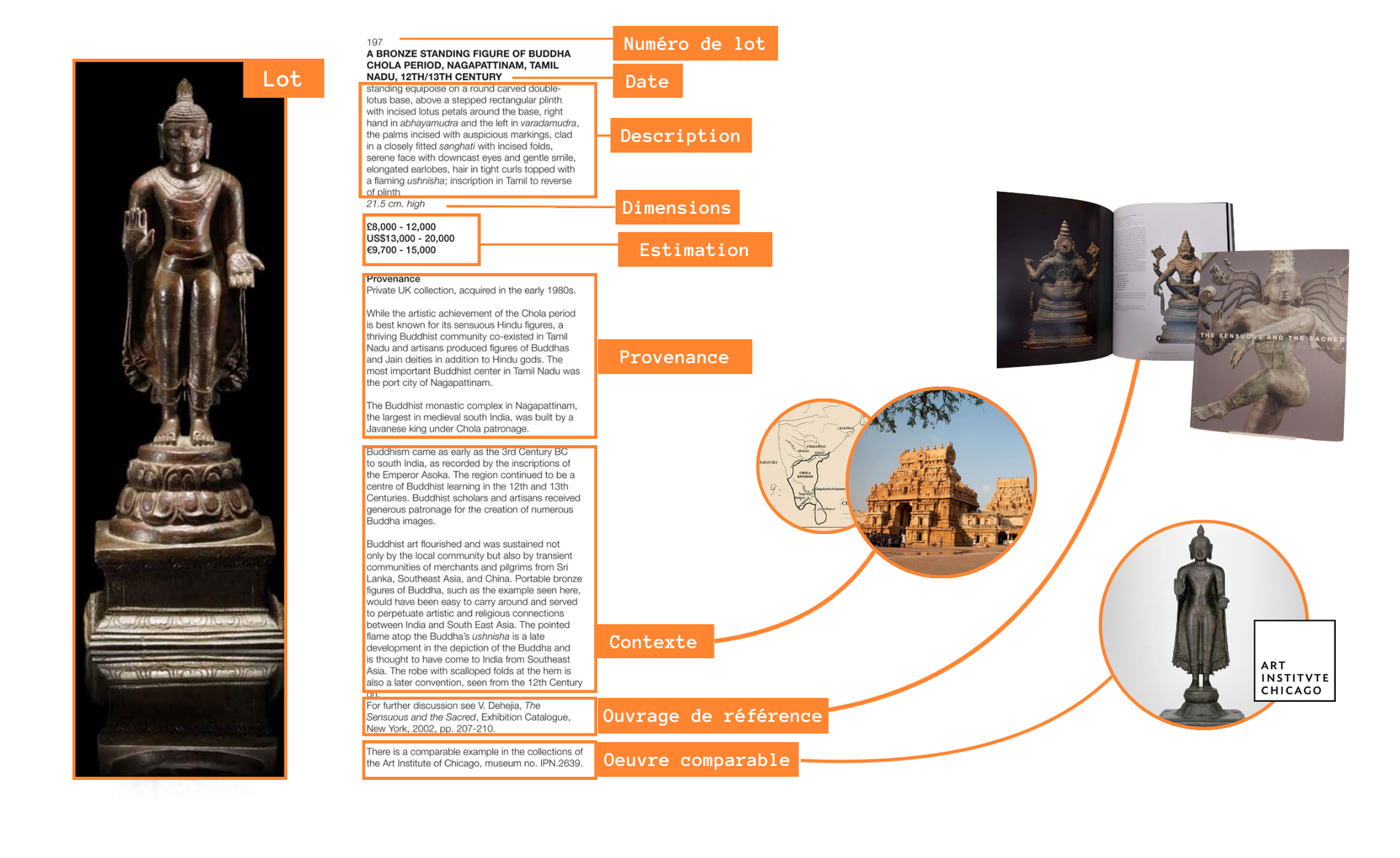
Indexing of auction catalogues from the documentation library to improve the referencing of works in the collection.
- analyze digitized heritage documents
- automate information extraction
- enrich the metadata of the collections
- improve accessibility and search
Processing workflow
TEKLIA develops artificial intelligence solutions used by major heritage institutions such as the Louvre Museum to analyze and structure cultural documents and collections.
- Optical Character Recognition (OCR)
- Segmentation of elements on the page and matching captions to images
- Metadata creation using automatic key/value pair recognition: extraction of elements from captions (title, date, media…) to a spreadsheet
- Extracting inventory numbers and associating them with the corresponding image for object indexing

Video: Conference at SITEM 2026
AI in the service of collection documentation: what are the objectives and operational challenges?
The Louvre and TEKLIA are hosting a discussion on the contributions of artificial intelligence to the processing and utilization of collection documentation, drawing on a concrete application. In 2025, the implementation of a project to extract data from documents in the Department of Islamic Art provides the Louvre with an opportunity to experiment with the use of artificial intelligence on its documentary collections: beyond the project’s strict objectives, a more exploratory approach is being tested. What are the stages of such a project, and what is the role of subject-matter expertise? What are the organizational and technical challenges? A look back at the project and a forward-looking perspective on the opportunities offered by the creation of the Digital Innovation division within the museum.
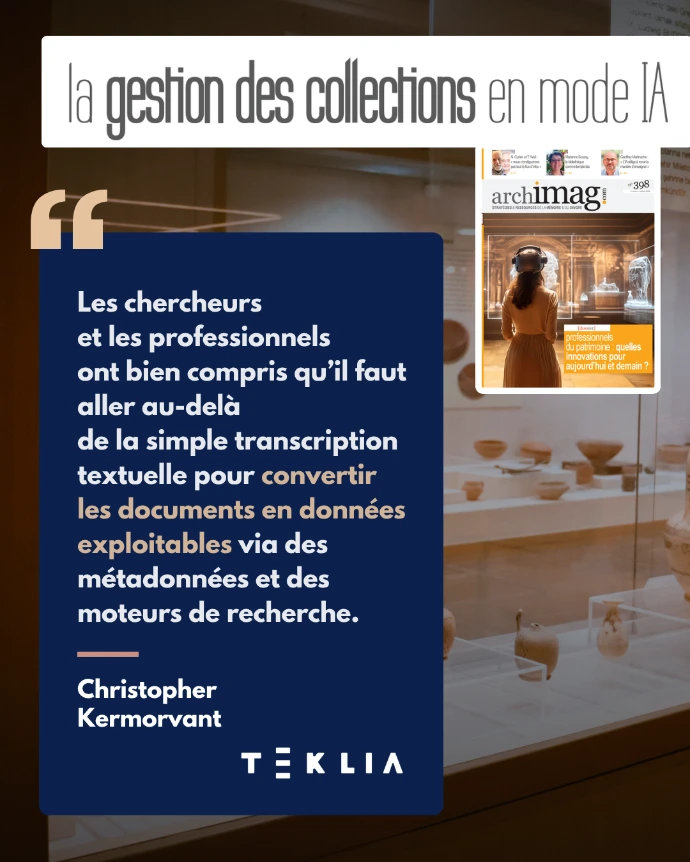
Article: "AI-powered collection management"
Heritage professionals: what innovations for today and tomorrow?
By Bruno Texier, published in October 2026 in Archimag No. 398
As heritage institutions manage increasingly complex collections, software publishers are multiplying AI-enhanced projects to improve their day-to-day management.
For museums, archives, and conservation services, these tools represent valuable solutions, available now or soon, for better documenting collections, preserving artworks, sharing knowledge, and welcoming the public.Discover how heritage tools are evolving and explore several innovative case studies!