Objectives of the HikarIA project
Supported by the French Ministry of Culture as part of the France 2030 plan, TEKLIA's pilot study with the Guimet Museum focuses on a collection of Japanese photographic albums dating from the mid-19th century to the early 20th century.
This initiative aims to leverage AI-based photographic analysis tools to improve the accessibility of these historical images, provide them with a rich cultural context, and contribute to the promotion of AI for the preservation of digital heritage.
Preserving, studying and sharing e the photographic collections of the Guimet Museum
Developing new tools for research in the history of photography by improving the accessibility of historical photographs through AI
Enriching knowledge about photography in Japan during the Bakumatsu, Meiji and Taisho periods (1853-1926)
The Joseph Dubois Collection
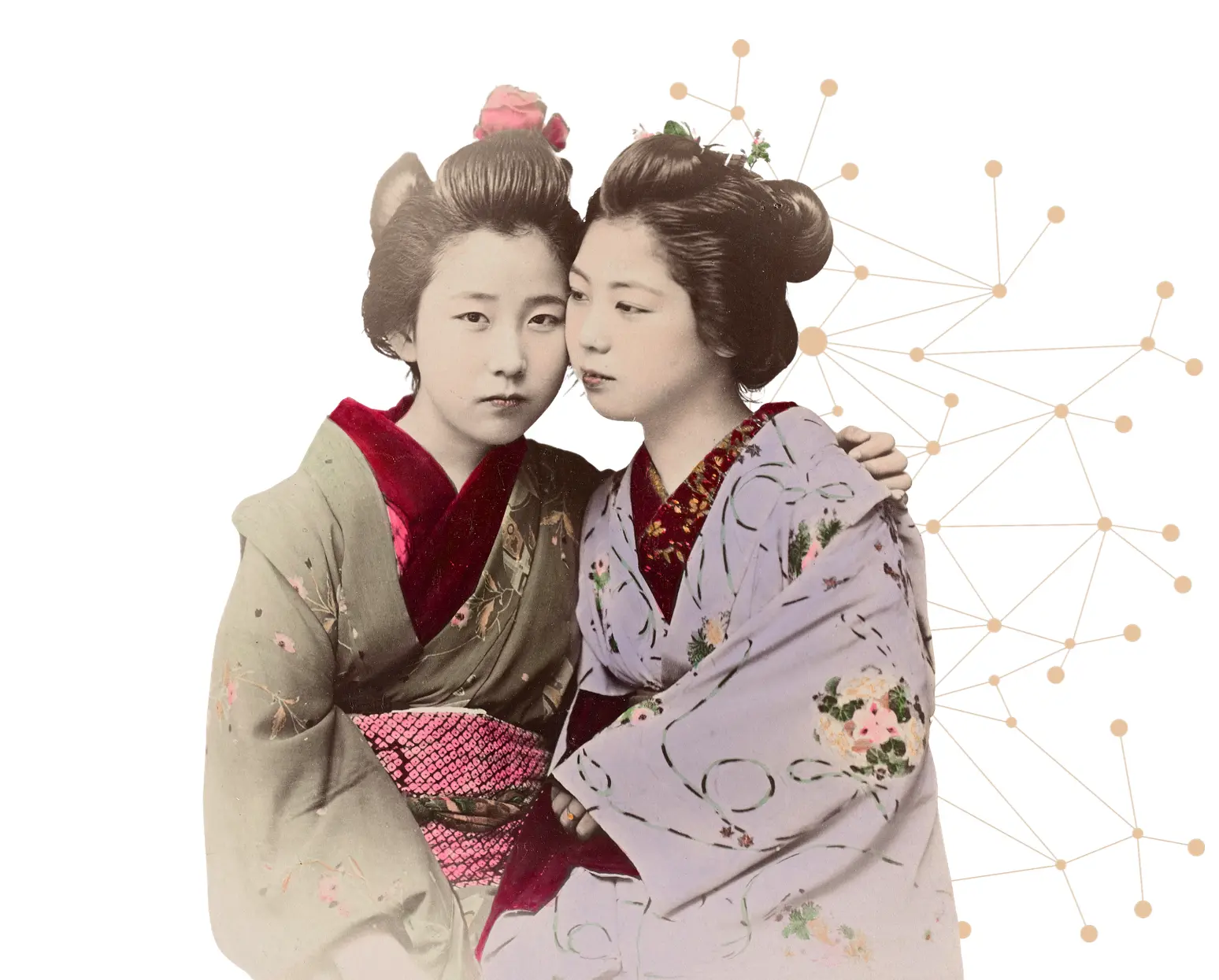
The Dubois collection offers a broad overview of commercial photographic productions in 19th-century Japan, whether in terms of materials, techniques, styles, subjects, or price ranges.
Since the museum's reopening in 2001, the Guimet Museum has pursued an acquisition policy for both historical and contemporary photographs.It was within this framework that, thanks to a grant from the Heritage Fund, the museum acquired the collection of Dr. Joseph Dubois in 2007, an exceptional collection of 280 albums of photographs of Japan taken between the mid-19th and early 20th centuries.
By its material importance and quality, this collection constitutes one of the world's most important collections of old photographs of Japan and of the "Yokohama school", a commercial production characterized by an idealized vision of landscapes and scenes of traditional Japan, coloured by Japanese painters for the most luxurious prints.
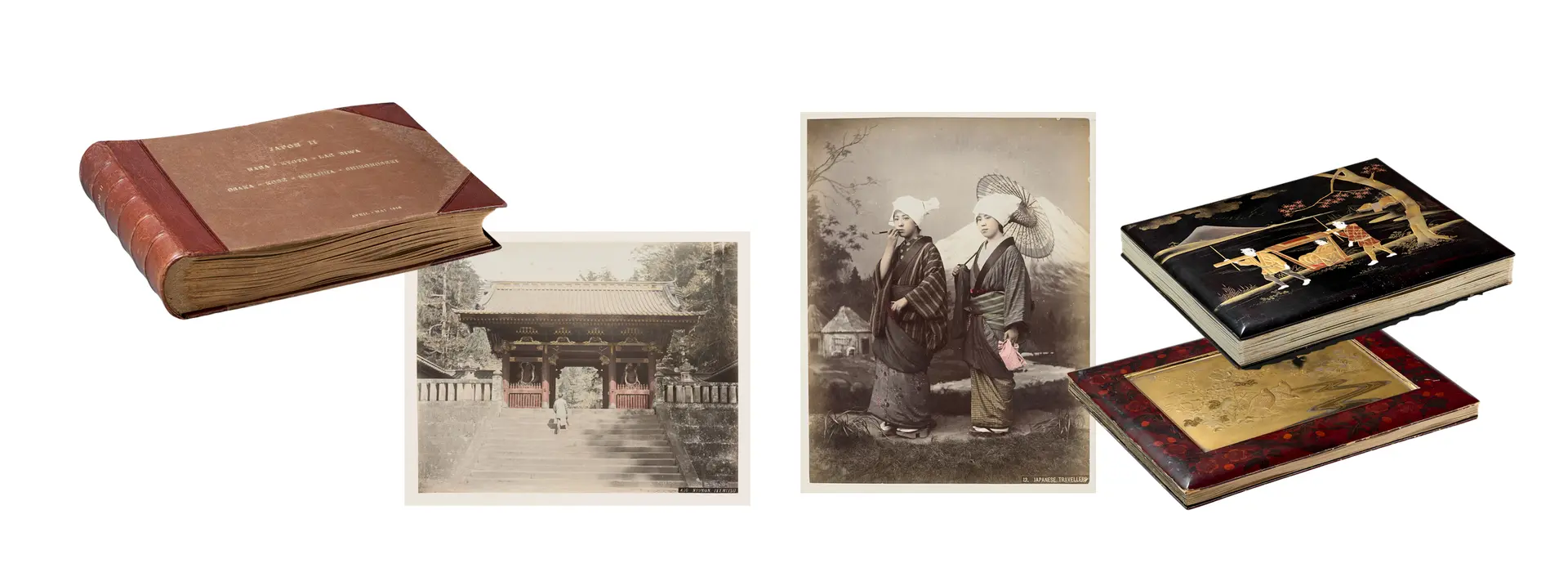
284 albums
More than 20 000 photographs
Artificial intelligence for the collection
Image detection in albums
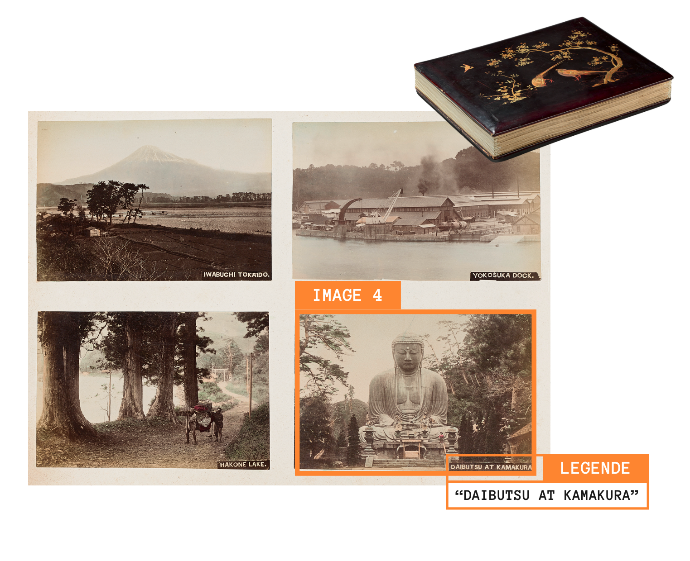
The pages of the Dubois collection albums contain one or more images.Following high-definition digitization, TEKLIA uses automatic segmentation to isolate each of these images, while preserving the link to its precise location within the album.The captions describing them are associated with them as metadata.
Layout analysis and segmentation
Precise detection of photographs and illustrations, isolating these graphic elements from the text and background.
Automatic caption recognition
Extracting captions using automatic text recognition.
Object and scene detection
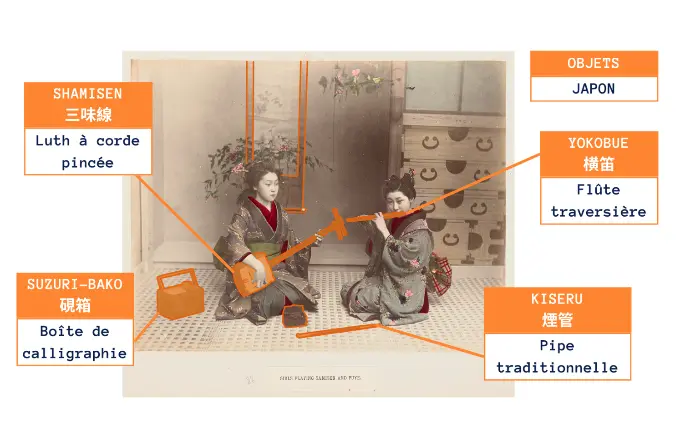
Artificial intelligence enables the identification of image content through visual analysis. Each search performed in HikarIA directly queries the image content, thus overcoming the limitations of manual keyword-based indexing.This analysis also enriches metadata according to a predefined thesaurus.
Content recognition
Identification and extraction of objects, individuals or settings for a detailed analysis of the visual content.
Metadata generation
Indexing of keywords detected in the image and enrichment of metadata.
Search by similarity
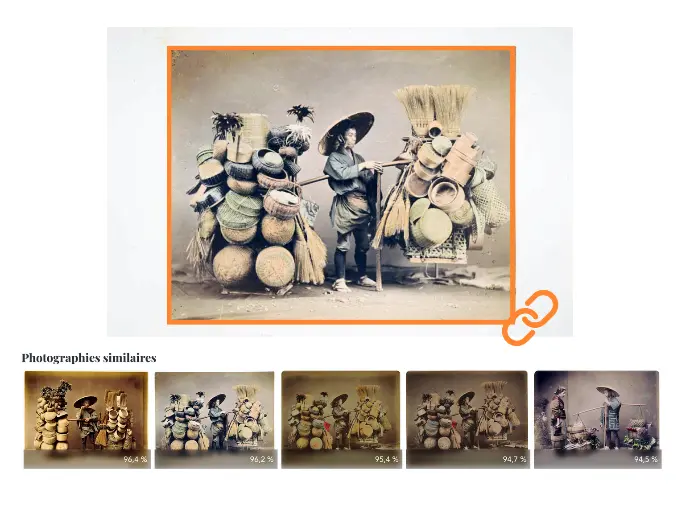
The platform offers a search based on visual and semantic similarity, allowing users to create links between similar or identical photographs.Similar images are always displayed below the currently viewed photograph to encourage discovery through content.
Recommendation based on proximity
Users can find images visually similar to a given example, regardless of how the image is tagged.
Comparison with images external to the corpus
It is possible to import your own image into HikarIA in order to find matches with the photographs in the corpus.
Duplicate detection
Duplicate detection is particularly interesting for the analysis in the history of photography of the works in the Dubois collection.
Multi-level indexing
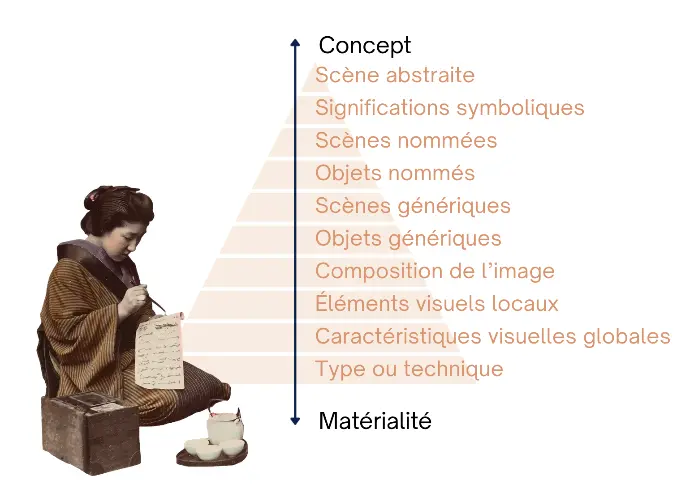
TEKLIA interprets images using customizable indexing criteria.For HikarIA, we chose a hierarchical classification of visual subjects, inspired by Jörgensen's pyramid.
From materiality...
Indexing assesses the most tangible and objective characteristics of the works.We identify the technique, the composition, the objects represented, but also known characters and places.
...to concept
It also allows for the analysis of more abstract concepts evoked by the photographs.Thematic searches can be performed using keywords such as "teaching" or "honor".
Features for statistical analysis
HikarIA offers statistical tools for photography historians working on the Dubois collection.
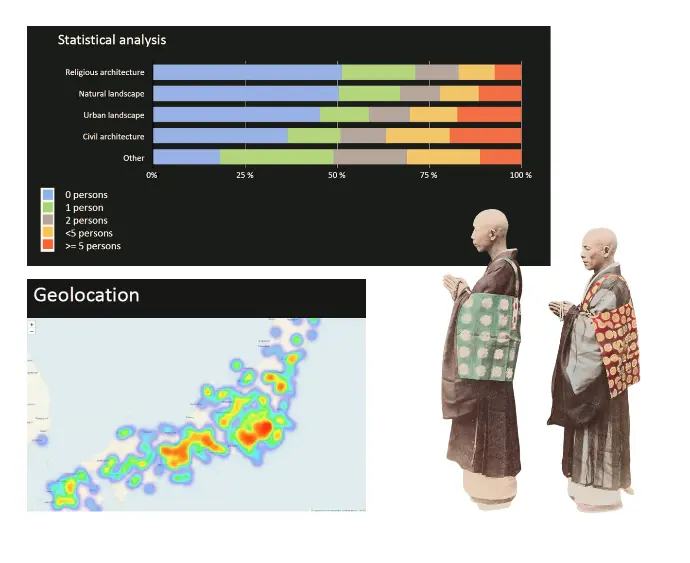
Location of the photographs
We created a dynamic map showing the geographical location of the images. This information comes from either the captions, the interpretation of the landscape depicted, or the origin of the albums.
Quantitative analysis of the objects depicted
The automatic creation of metadata allows for the cross-referencing of quantitative information in an exhaustive and systematic manner.
HikarIA at the UNESCO symposium on the role of artificial intelligence in museums
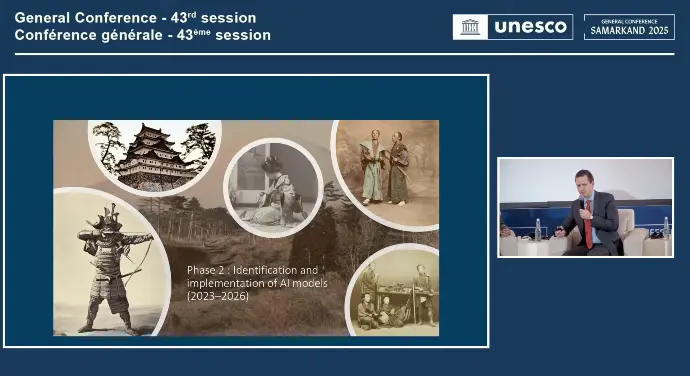
The HikarIA project gained international exposure during the symposium organized by UNESCO as part of its 43rd General Conference in Samarkand, Uzbekistan, on November 1, 2025.
See more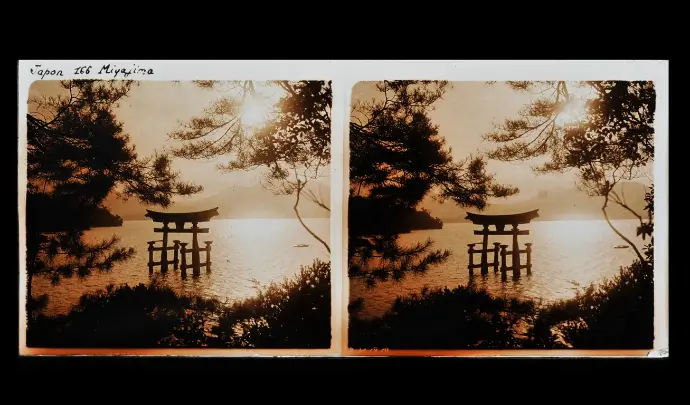
Discover TEKLIA's AI-Powered Photographic Analysis Service
TEKLIA is proud to unveil its novel photographic analysis service, a breakthrough in the field of digital iconographic collection management.
See more